Worldbox Business Intelligence Risk Rating – October 2025
THE PHILIPPINES
Summary
| Overall Risk Score 28/40 (Stable)
Political risk: Stable 8/10 Economic risk: Stable 7/10 Commercial risk: Stable 7/10 Technology risk: Stable 6/10 The risk assessment of a country is made up of four components, being Political, Economic, Commercial and Technological. Each component is scored out of 10 with 1 being the highest risk and 10 the lowest. |
ESG Risk: 7/10 (Stable)*
*Environmental, social and governance (ESG) issues are becoming increasingly important to companies, investors and consumers in Southeast Asia. That is why we are now preparing a separate ESG score and section with our quarterly country risk reports. We explain how each country rates, looking at the E, S and G individually, and outline recent developments. |
Political Risk – Stable at 8
The Philippines Is a multi-party, representative democracy modelled on the US system. This involves a presidential system of government with a bicameral legislature and an independent judiciary. The president is limited to one 6-year term. According to Freedom House:
“Elections are free from overt restrictions. However, established political elites benefit from structural advantages, and highly organized disinformation campaigns and widespread vote buying undermine fair competition. Corruption is endemic, and anticorruption bodies struggle to uphold their mandates. Journalists and activists perceived as critical of the government or other powerful interests can face criminal cases, and in some cases violent and even deadly attacks.”
The current president, Ferdinand “Bongbong” Marcos Junior, was elected in a landslide at the May 2022 presidential election. The son of former dictator Ferdinand Marcos, who ruled the country from 1965 to 1986, Marcos’ approval ratings have improved recently, rising to 64% in August from 59% in April 2025. Meanwhile, the approval ratings of his main rival, Vice- President Sara Duterte, have fallen to 54%, from 58%.
Marcos’s rising popularity may be linked to the recent launch of an anti-corruption drive, including lifestyle checks of officials amid the public outrage over the reported extravagant living of families of politicians and business owners implicated in corruption-tainted government projects. In September, an alliance of 30 influential Philippine business and civic organisations demanded an independent investigation into what it describes as “excessive corruption” linked to government infrastructure projects.
Earlier in August, Marcos revealed the results of an internal audit into flood control projects, revealing concerning patterns of irregularity. Key findings showed that out of US$9.63 billion in flood control spending since 2022, thousands of projects were either substandard, poorly documented, or non-existent. In July, Marcos blamed corruption for the intense flooding crisis that submerged communities across the country.
Meanwhile the political battle between Sara Duterte and Marcos continues. Late last year, the lower house of Congress, which is controlled by Marcos’ loyalists, filed a petition to impeach Ms Duterte. However, in July, the Supreme Court blocked an impeachment trial against Duterte. The ruling means Duterte has been granted a reprieve from possible ousting, at least until February 2026. An impeachment trial would have prevented Duterte from running for the 2028 presidency, which Marcos cannot contest due to a single-term limit for Philippine presidents.
Marcos and Sara Duterte entered into a marriage of convenience to contest the May 2022 election. In June 2024, Sara Duterte announced her resignation from office, and the once celebrated “UniTeam” came to an end. Marcos’ decision to break with the Dutertes carries risks. The latter enjoy strong popular support in the south, and among the millions of overseas Filipino workers. Duterte has accused the government of surrendering her father to “foreign powers” and of violating Filipino sovereignty.
The mid-term elections held in May provided a litmus test of support for Marcos and Duterte with 82% of the electorate casting their vote. Twelve of the 24 seats in the Senate were up for election and the results would determine whether Duterte would be impeached, given two thirds of senators have to vote in favour. In the event, the outcome proved disappointing for Marcos. His party won six of the 12 Senate seats but one of the six also accepted endorsement from Duterte, whose camp won a further four Senate seats.
Economic Risk – Stable at 7
The Philippines is the third largest economy in the Southeast Asian region after Indonesia and Thailand. The economy has been one of the most dynamic in the East Asia and Pacific region, powered by increasing urbanization, a growing middle class, and a large and young population. Services and manufacturing account for around 90% of GDP with the share of agriculture falling steadily to around 10%.
The IMF concluded a staff visit to the Philippines in May 2025 by reporting that the economy remains resilient despite the challenges of an external environment characterized by heightened policy uncertainty. It added that the economy holds significant potential with a sizable demographic dividend and abundant natural resources. It praised the government for undertaking reforms to reduce infrastructure, health and education gaps, promoting foreign direct investment, and diversifying the country’s export markets. It added, however, that these reforms should be complemented by strengthening social protection programs, promoting digitalization, and increasing resilience to climate shocks and natural disasters.
Macquaurie, the Australian multinational investment bank, released a very optimistic report on the outlook for the Philippines economy in July 2025. The bank said that the Philippines has a number of key criteria in its favour and is becoming the focus of attention for investors eyeing opportunities in new and emerging economies. It added that “along with robust economic growth, a domestic-geared market relatively sheltered from external forces, and an investment-friendly environment, it has a young and digitally native population, increasing urbanisation, and growing demand for low cost, renewable energy.”
Macquaurie points out that the fact that consumer spending is the country’s top contributor to GDP boosts the economy’s resilience to external shocks, and should help protect it during any global economic slowdown. It added that the biggest cause for optimism was the country’s ‘demographic dividend’. The population has a median age of 25.7 years, a figure that contrasts sharply with the ageing populations of some of its regional neighbours.
The country’s growing middle class is another positive. The proportion of middle-income earners had risen from 29% in 1991 to 40% by 2021.
“The young, dynamic population will support sustainable growth, driving demand for higher-quality products and services as economic mobility rises,” says Macquarie.
Commercial Risk – Stable at 7
The US State Department’s latest Investment Climate report on the Philippines, published in August 2024, says the government remains committed to improving its overall investment climate and sustaining economic growth.
The report adds that in recent years the country has taken steps to open new sectors of the economy to foreign investment. Amendments to the Public Services Act opened sectors such as railways, airports, expressways and telecommunications to 100% foreign ownership.
However, impediments to foreign investment – including poor infrastructure, high power and logistics costs, regulatory inconsistencies, a cumbersome bureaucracy, and corruption – have hampered the government’s efforts. Traffic in major cities and congestion in the ports remain barriers to doing business. Large, family-owned conglomerates dominate the economic landscape, sometimes crowding out smaller businesses.
The Philippines ranks joint 114th out of 180 countries in Transparency International’s 2024 Corruption Perceptions Index – lower than the likes of Thailand, Indonesia and Vietnam. According to the Philippines Corruption Report by GAN, high levels of corruption severely restrict the efficiency of businesses operating in the Philippines.
The country lies in 82nd place in terms of economic freedom, as ranked in the Heritage Foundation’s 2025 Index. The Philippines is ranked 16th out of 39 countries in the Asia-Pacific region. The country’s economic freedom score is higher than the world and regional averages. The Philippines’ economy is considered “moderately free” according to the 2025 Index.
Technology Risk – Stable at 6
The Global Innovation Index (GII), from the World Intellectual Property Organization, is an important index used by countries and multinational companies to assess innovation ecosystems and aid in policymaking and investment decisions.
The Philippines ranked 53rd out of 133 countries in the 2024 GII, down from 50th place in 2020.
The Philippines ranked 70th in the world for mobile speeds and 54th for fixed broadband speeds during July 2025, according to the Ookla.
Government policies
The Philippines has experienced a significant increase in the use of digital technology in several industries, primarily driven by a tech-savvy population, government policies that encourage digital adoption and investments both locally and internationally.
The Philippine Development Plan 2023-2028 specifies digital transformation as one of its underlying themes. The Philippines envisions achieving a robust digital economy to make the Philippines “globally competitive”. The goal is to bridge the “digital divide” across the archipelago, where nearly 40 percent of the country lacks reliable internet access.
The government has also recognized AI’s importance for economic growth and innovation, establishing initiatives such as the National AI Roadmap and the establishment of the National AI Research Center to foster AI adoption and research.
Infrastructure
The government has launched a National Fiber Backbone project aimed at building a cable network across the archipelago. Upon completion in 2026, the project should increase the broadband penetration rate nationally from 33% to 65% and reach 70 million out of the current 115 million population nationwide. It is also hoped the project will lower the price of internet connectivity.
Education and skilled staff
The Philippines is struggling to produce enough STEM graduates to meet demand with less than a quarter of senior high school students enrolled in STEM subjects. In AI, a shortage of skilled professionals with expertise in AI, has created a talent gap that has impacted the ability of companies to develop and implement sophisticated AI solutions.
October Bulletin
Political Risk – Stable at 8
The popularity of the Duterte family appears to be waning significantly, suggesting that Sara Duterte, the current vice-president could struggle to mount a challenge at the next president elections to be held in 2028. Al Jazeera reports that opinion and approval surveys conducted in March indicate that at least 51% of the public wanted Rodrigo Duterte to be tried for his alleged crimes. Likewise, polls in June found that at least 66% of people want Sara Duterte to answer for allegations of corruption against her through an impeachment process.
Given that President Ferdinand “Bongbong” Marcos Junior is barred by the Constitution from running again for the presidency, the Philippines should be given a fresh start politically in 2028 with two of the major political dynasties removed from the race.
The Philippines is stepping up its readiness for escalating clashes with China in the South China Sea. In August, Manila was reportedly planning to try and acquire six guided-missile frigates from the Japanese navy. The ships are due to be retired in 2027 and would significantly increase the Philippines’ navy’s capabilities.
The Japan Times reports that the move would not only substantially deepen military and defence-industrial ties with Manila, it would also open the door to similar transfers of used Self-Defense Forces equipment across the region as Tokyo works to create a “desirable security environment.”
A defence pact between Manila and Tokyo came into effect in September. The agreement will permit troops from both countries to train within their respective territorial waters, territories and air spaces through legal agreements stipulating the status of forces while training or deployed. It significantly benefits the Philippines by enhancing security cooperation through a legal framework for the increased deployment of Japan’s Self-Defense Forces in the Philippines. This could serve as a deterrent to potential aggressors. The deployment of Japanese troops in the Philippines would mark the first time they have operated in the country since the Second World War.
Economic Risk – Stable at 7
The economy grew by around 5.6% in 2024 – the second fastest pace in ASEAN – largely driven by private consumption. Services and industry remained the main drivers of growth in sectoral terms, expanding by 6.7% and 5.6%, respectively. Construction also had a robust full-year growth performance of 10.3%, manufacturing rebounded.
The economy continued to perform well in the first of 2025. It expanded by 5.4%, only slightly down on the 6.2% recorded in the same period of 2024 when global economic conditions were much more benign. Inflation also averaged just 1.7% in the first six months of 2025, well below the Bangko Sentral ng Pilipinas’ (BSP) 4% annual target.
In late August 2025, the central bank cut its key policy rate by 25 basis points (bps) to 5%. The central bank has so far lowered borrowing costs by a total of 150 basis points since its easing cycle began in August 2024. The BSP has projected inflation to average 1.7% this year, before picking up to 3.3% in 2026 and 3.4% in 2027.
The Philippines received more favourable treatment than some other Southeast Asian countries after President Trump initially imposed a tariff of 17% on the country in April, later pausing the tariffs for 90 days. However, in July, Trump imposed a rate of 19% for goods from the Philippines after a meeting with President Marcos in Washington while Manila has agreed to remove all its tariffs on American goods.
However, there are highly credible reports that the effective rate in the Philippines is just 6%. Marcos’ supporters said that Marcos’ trip helped secure and expand key exemptions embedded Trump’s executive order – particularly for electronics and semiconductors.
The country plans to take advantage of the relatively low tariffs compared to Asian neighbours by exporting more semiconductors, coconut and mango products to the US. Finance Secretary Ralph Recto also said the Philippines could expand its share of the US market for garment exports, with major competitors like China, Bangladesh, Vietnam, Mexico, and India facing higher levies.
Commercial Risk – Stable at 7
In its May 2025 review of the economy, the IMF reported that systemic financial risks remain contained, credit growth remains healthy, and the banking system has strong capital and liquidity buffers. However, it added that banks’ exposures to commercial and residential real estate, leveraged non-bank financial institutions and a fast-growing consumer credit market warrant continued close monitoring.
The organisation also said that important progress has been made in addressing Anti-Money Laundering/Combating the Financing of Terrorism (AML/CFT) issues, as exemplified by the Philippines’ welcome exit from the Financial Action Task Force (FATF) grey list in February 2025.
In August, the central bank stated that Filipino banks have solid balance sheets, assets are growing, deposits are growing, and income is growing. It added that banks have maintained sufficient capital and liquidity, with liquidity standards far exceeding international liquidity standards.
Technology Risk – Stable at 6
In September 2025, the London-based research agency Public First projects that AI could add as much as PHP 1.8 trillion (US$31 billion) to the country’s economy – equivalent to a 7% boost in gross value added (GVA). According to the report, half of Filipinos already use AI tools weekly, and optimism runs high: 46% believe AI will benefit the nation, while 50% expect personal gains from the technology.
Environmental, Social and Governance (ESG) – Stable at 8
The United Nations’ Sustainable Development Goals (SDGs) are recognised as a beneficial framework for responsible investment. The Sustainable Development Report from Cambridge University Press assesses the progress of all UN Member States on the SDGs. It provides a useful means of ranking Southeast Asian countries on their ESG progress.
The Philippines is ranked 87 out of 167 in the 2025 report, with a score of 68.3.
Environment –The Philippines faces a number of environmental challenges including flooding, air and water pollution from rapid urbanization and industrialization, deforestation and soil erosion due to logging, and a serious plastic waste crisis exacerbated by insufficient waste management systems.
Flooding has become a major political issue because of allegations that significant government funds designed to alleviate the effects of flooding and prevent flooding have been lost due to corruption. In July 2025, typhoons and seasonal monsoon downpours triggered massive floods that affected millions of people, displaced more than 300,000 others, damaged nearly 3,000 houses and left extensive infrastructure and agricultural losses. At least 26 people died.
President Marcos said in September that more than 6,000 of the 9,000 flood control projects implemented so far in his more than three years in office have inadequate or unusual specifications that should be investigated.
- Air pollution – stemming from the fact that over half of the population is dependent on the burning of fossil fuels to meet its daily energy needs. The World Health Organization says that air pollution kills around 120,000 Filipinos every year.
- Plastic pollution – around 2.7 million tons of plastic waste is generated every year. That stems from an insufficient waste-management system, coupled with a high dependence on single-use plastics.
- Marine pollution – around 20% of the plastic waste ends up in the sea. Theresa Lazaro, the country’s Foreign Affairs Undersecretary, has said that “there would be more plastics than fish by 2050, while oceans would be overheated and acidified if people fail to act now”. In recent years, the government has initiated various measures to curb marine pollution in the country.
Social – According to the US State Department, the Department of Labor’s Bureau of Working Conditions monitors and inspects compliance with wage, hour, and health and safety laws in all sectors, including workers in the formal and informal sectors, and non-traditional labourers. However, labour groups say enforcement is lax particularly in terms of occupational safety and health standards in workplaces.
Governance – According to the US State Department’s 2024 Investment Climate statement, Responsible Business Conduct (RBC) is practised in the Philippines, although no domestic laws require it. The Philippine Tax Code provides RBC-related incentives to corporations, such as tax exemptions and deductions. Various non-government organizations and business associations also promote RBC. US companies report strong and favourable responses to RBC programmes among employees and within local communities.
October Bulletin
Environmental, Social and Governance (ESG) – Stable at 7
In May 2025, the Securities and Exchange Commission (SEC) announced that it will implement the Philippine sustainability reporting law for publicly listed companies starting in 2026. This move aims to align corporate disclosures with international sustainability standards and ensure transparency on ESG matters.
Latest economic data
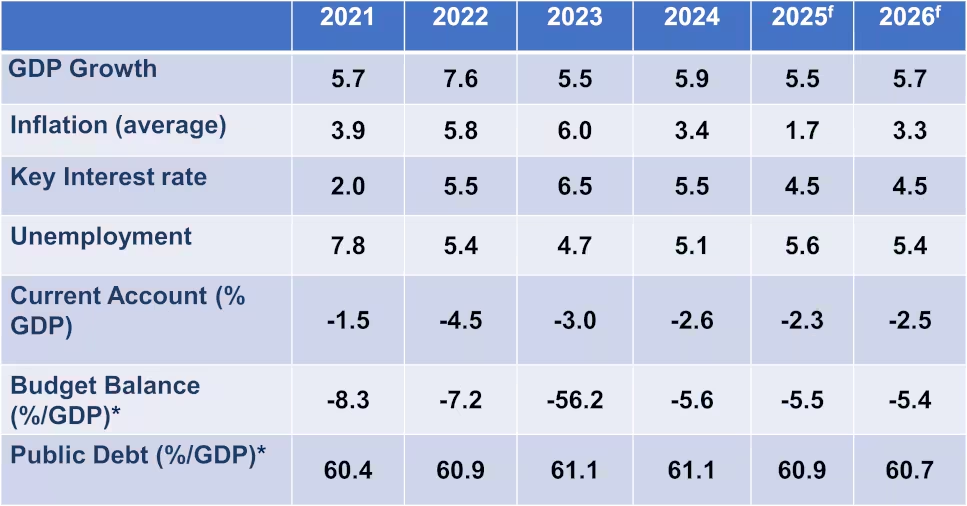
f forecasts
* Official figures
Source: World Bank/International Monetary Fund, December Article IV consultation, except where stated
Useful links
https://www.transparency.org/en/cpi/2021
https://www.imf.org/en/Countries/PHL
https://www.adb.org/countries/philippines/main
https://business.inquirer.net/
https://mb.com.ph/category/business/business-news/
https://fulcrum.sg/about-fulcrum/

Source: Worldbox
About Worldbox Business Intelligence
Switzerland-based Worldbox Business Intelligence is a global leader in business data and intelligence. With over 400 million companies across all major and emerging markets, our solutions support real-time onboarding, KYB, and compliance verification through the delivery of credit reports, profiles, ownership and management, legal status and history details as well as financial and other business information.
Accessible via API, online search, and the AWS MCP Servers, available over AWS marketplace, Worldbox enables organizations to search, evaluate, and acquire company data with transparent pricing and seamless AI integration.
With its global network and Swiss precision, Worldbox empowers smarter, more efficient business decision-making.
“Worldbox Business Intelligence – Bringing Swiss Precision To Data”
Copyright (C) 2025 Worldbox Business Intelligence. All rights reserved.
Our mailing address is:
Worldbox Business Intelligence
Breitackerstrasse 1
Zollikon
Zurich 8702
Switzerland