Worldbox Business Intelligence Risk Rating – October 2025
BRUNEI
Summary
| Overall Risk Score 29/40 (Stable)
Political risk: Stable 8/10 Economic risk: Stable 7/10 Commercial risk: Stable 7/10 Technology risk: Stable 7/10 The risk assessment of a country is made up of four components, being Political, Economic, Commercial and Technological. Each component is scored out of 10 with 1 being the highest risk and 10 the lowest. |
ESG Risk: 8/10 (Stable)*
*Environmental, social and governance (ESG) issues are becoming increasingly important to companies, investors and consumers in Southeast Asia. That is why we are now preparing a separate ESG score and section with our quarterly country risk reports. We explain how each country rates, looking at the E, S and G individually, and outline recent developments. |
Political Risk – Stable at 8
Brunei is the smallest country in Southeast Asia, with a population of 450,000. However, thanks to immense oil wealth, it is also one of the richest. Located on the island of Borneo and surrounded by Malaysia and the South China Sea, the country is politically stable. The Sultan of Brunei is both head of state and head of government, and exercises absolute power.
There are no elected representatives at the national level, while freedom of the press and assembly are significantly restricted. A legislative council with 36 appointed members is limited to a consultative role. Brunei operates two legal systems: Common Law, which has its origins in the English system, and a Sharia Penal Code, running in parallel with the Common Law system. Around 80% of the population is Muslim. All senior judges are appointed by the Sultan. However, according to Freedom House, the courts appear to act independently when handling civil matters.
There is little sign of dissent and the monarchy appears to enjoy popular support. The Sultan has used the oil wealth to provide citizens with basic medical and dental services at no charge, as well as free education and heavy investment in infrastructure development. There is no personal income tax. Citizens also enjoy heavy subsidies on fuel, electricity, water, rice, sugar and other staple foods.
Crown Prince Haji Al-Muhtadee Billah, 51, the eldest son of the Sultan of Brunei, is heir to the throne. Brunei maintains close ties with the US, the UK (from which it gained independence in 1984), Malaysia and Australia. In December 2024, for example, Brunei renewed an agreement with the UK to have a permanent army garrison in the country. The Garrison Agreement is renewed every five years.
China is also increasingly influential and has become Brunei’s largest trading partner, foreign investor and source of tourists. China is the biggest investor in Brunei’s port and petrochemical refinery, the country’s two major infrastructure initiatives. Brunei has become an enthusiastic supporter of China’s Belt and Road initiative.
Economic Risk – Stable at 7
Oil and gas account for around 90% of Brunei’s total exports and just under two-thirds of the country’s GDP. Brunei has no sovereign debt, domestic or foreign. It has the second-highest GDP per capita in ASEAN, after Singapore, at around US$77,000 in 2024, according to the IMF.
The Brunei dollar is pegged to the Singapore dollar at a one-to-one ratio, and the Singapore dollar is legal tender in the Sultanate. The peg has provided the country with prudent monetary policy management from the Monetary Authority of Singapore. Together with generous fuel and energy subsidies, this policy has helped keep inflation under control.
Brunei aims to diversify its economy in line with the authorities’ Vision 2035, focusing on sectors like downstream oil and gas, food, tourism, information and communications technology (ICT), and services. Vision 2035 draws heavily from Saudi Arabia’s Vision 2030 strategy to reduce oil dependency through vast changes across different sectors of its economy.
The country has had some success in diversifying the income derived from sales of oil and gas, but the sector still accounts for about 50% of its GDP.
In order to make the country more attractive to foreign investors, Brunei has scrapped several tax laws and initiated the development of a free-trade zone at its main port of Muara, according to an August article in the World Political Review. A spate of new incentives has also streamlined the process of investment for foreign companies and entrepreneurs, making it easier for newcomers to do business in Brunei.
This strategy has had some successes with companies moving operations from the likes of Singapore to Brunei to benefit from a cheaper, largely English-speaking and highly educated workforce. Singapore cyber-security firm CyberSafe, for example, set up its security operations control room in Brunei in October 2024 and has said that costs are around 60% of a similar set-up in Singapore, thanks to lower rent and wage costs. Singapore’s bilateral trade with Brunei is growing fast, reaching US$4.9 billion in 2024, 36.9% up on 2023. Saudi Arabia and the UAE have also increased their investments in Brunei.
However, the article in World Political Review argued that economic diversification and regional diplomacy will not be enough to secure Brunei’s post-oil future. It added “that can only happen if Brunei keeps its best workers from leaving, while simultaneously bringing in high-skilled foreign talent needed to vitalize industries like finance and advanced aquaculture”, and “that’s an unlikely outcome unless Brunei’s absolute monarchy softens its strict social governance.”
The government has taken some steps towards liberalising the political environment. The 2023 plan calls for young Bruneians to be given a greater voice in the country and economy, and also pledges social and cultural change, promising equal access to education and prioritizing environmental protection. The government is also tolerating more outspoken online activism.
Meanwhile, a March 2025 article in the East Asia Forum found that one of Brunei’s enduring challenges is sluggish private sector-driven growth, reflecting weak entrepreneurship and persistent skills mismatch. It explains that most citizens are employed in the public sector, while the private sector heavily relies on inexpensive, low-skilled foreign workers. East Asia Forum adds that:
“The sharing of resource wealth through generous public sector employment — providing attractive wages and better working conditions — has created a large middle class while stifling entrepreneurial ambition and skewing education choices, hindering private sector-driven diversification.”
Commercial Risk – Stable at 7
The US State Department’s 2024 Investment Climate Statement describes Brunei as having a well-educated, largely English-speaking population, excellent infrastructure, and a government intent on attracting foreign investment and projects. It adds that in parallel with Brunei’s efforts to attract foreign investment and create an open and transparent investment regime, the country has taken steps to streamline the process for entrepreneurs and investors to establish businesses.
Other advantages include the stable political climate and the fact that the country is generally sheltered from natural disasters. Brunei’s central location in Southeast Asia, with good telecommunications and airline connections, business tax credits in specified sectors, and the absence of income, sales or export taxes offers a welcoming climate for potential investors, adds the report.
Other important characteristics for foreign investors, according to the State Department, include:
- Brunei’s regulatory system has limited transparency, particularly in lawmaking processes and impact assessments.
- Brunei’s protection and enforcement regime for intellectual property rights is still in development but is increasingly strong and effective.
- US companies do not generally identify corruption as an obstacle to conducting business in Brunei. The level and extent of reported corruption in Brunei is generally low.
The Heritage Foundation ranked Brunei’s economy as the 46th freest in its 2024 Index. Brunei is ranked 8th out of 39 countries in the Asia-Pacific region. The country’s economic freedom score is higher than the world and regional averages. Brunei Darussalam’s economy is considered “moderately free” according to the 2025 Index.
The Heritage Foundation said that the economy maintains a relatively high degree of market openness that facilitates trade and investment. The legal system generally secures private property and macroeconomic stability. The investment environment is relatively efficient and transparent, although the regulatory framework needs to be more streamlined to enhance overall economic competitiveness.
The banking system remains stable, and risks appear contained, according to the IMF’s September 2024 Article IV report. The IMF said the capital ratio of banks was strong, at around 21% of risk-weighted assets in 2023, well above regulatory requirements (10%). Gross non-performing loans (NPLs) as a share of total loans declined from 3.3% in 2022 to 2.6% in 2023, owing both to a decrease in loans classified as NPLs and an increase in gross loans. Banks’ return on assets (before tax) improved to 2.1% in 2023, from 1.3% in 2022, as higher global interest rates pushed up earnings from offshore assets. Banks continue to have abundant liquidity, funded mostly by domestic deposits.
Technology Risk – Stable at 7
The Global Innovation Index (GII), from the World Intellectual Property Organization, is an important index used by countries and multinational companies to assess innovation ecosystems and aid in policymaking and investment decisions.
Brunei Darussalam ranked 88th among the 133 economies in the GII for 2024. The Sultanate ranked 50th among high-income economies and 14th among 17 economies in Southeast Asia, East Asia and Oceania.
Brunei has the tenth-fastest 5G download speed in the Asia-Pacific region, at 149.6 megabits per second (Mbps), according to Opensignal. Around 92% of households in Brunei have access to a fibre-optic network, while 90% of the population is covered by 5G mobile services.
Government policies
Brunei has identified ICT as a key sector it wishes to expand to help reduce the dependence on oil and gas. In 2020, the government announced a Digital Economy Masterplan 2025, with multiple projects that will propel Brunei to become a smart nation through digitization. The projects include:
- The National Information Hub – a platform for information integration among government agencies
- The Digital Identity – a single nationwide digital authentication key that provides access to multiple online services offered by the government
- The Digital Payment Hub – a flagship project consisting of a National QR Code and an Instant Payment System, allowing users to make immediate and cost-effective fund transfers.
The digital-payment and e-commerce segments have grown rapidly since the onset of the pandemic. Collaborations between domestic financial institutions and fintech companies have resulted in innovative payment solutions, including e-wallets such as BIBD QuickPay, Progresif Pay, DSTPay and Beep Digital Solutions.
However, despite the advances in digitization in recent years, the ICT sector remains in its infancy, accounting for just over 2% of GDP.
Infrastructure
Brunei has a modern advanced infrastructure system with a modern road network, two deep-sea ports. The government has invested heavily in developing a fibre-optic network (which now measures around 6000 kilometres in length) and in installing 5G.
In June 2025, the government unveiled its 12th National Development Plan (2024-2029), under which it plans to spend around US$3.1 billion on 305 projects aimed at boosting key sectors such as education, health, industrial growth, housing, infrastructure, digital transformation, and green technology.
The Ministry of Finance and Economy said that the plan aligns with Brunei’s long-term vision which focuses on six key strategic areas: enhancing education infrastructure, preparing future-ready talent, promoting sustainability, strengthening national resilience and citizens’ welfare, expanding non-oil and gas sectors, and improving public sector efficiency.
Education and skilled staff
Brunei has placed an emphasis on STEM education for many years and now produces one of the highest proportions of STEM graduates among developing countries. In 2023, for example, just over 38% of Brunei students graduated in STEM subjects. The drive is continuing, with new initiatives to push students in the direction of STEM subjects being announced in 2024.
October Bulletin
Political Risk – Stable at 8
There is little obvious threat to Brunei’s political stability. There is no credible opposition, the government controls the media, and Sultan Hassanal Bolkiah, 78, remains popular. The Sultan shows no sign of wishing to relinquish the throne, but the succession of Crown Prince Haji Al-Muhtadee Billah, when the Sultan does step down, seems assured. That should ensure continuity of government economic and social policy.
Living standards remain very high on a global and regional basis, and there is no sign of any significant opposition to the status quo. Brunei has close military ties with the US, the UK and Australia, which continue to provide protection against any possible regional instability.
Economic Risk – Stable at 7
The economy grew by 4.2% in 2024, the fastest pace in 25 years. The rebound in the oil-and-gas sector in 2024 reflected production from new oil fields that came on stream in 2023. Increasing tourism, transport and business, as well as downstream activities, helped boost the services sector. Despite the strong growth, the fiscal deficit remains a matter of concern and the government is implementing measures to address the issue. These include reviewing government department expenditures, reducing waste, and eliminating unproductive spending.
However, the economy shrank in the first quarter of 2025 by 1.8% on an annual basis. The decline largely reflected a contraction in the energy sector which saw a fall in LNG exports. Other key sectors such as agriculture and fisheries, manufacturing and services also declined.
Despite the fall in Q1 output, the ASEAN+3 Macroeconomic Research Office (AMRO) reported in August 2025 that overall in 2025, Brunei’s economy will continue its robust recovery, underpinned by modest inflation and macroeconomic stability. It added that prudent fiscal buffers and a strong external position provide resilience against global headwinds. However, AMRO warned structural reforms continue to face challenges, exacerbated by external pressures such as energy market volatility, shifting trade dynamics, and the accelerating global transition toward decarbonization.
AMRO said that economic activities remain robust in 2025, reflecting a broad-based growth momentum. Growth has been led by a strong rebound in both the upstream and downstream oil and gas sectors. It added that the non-oil and gas sector is also performing well, supported by the continued strength in trade, air transport, and communication. It also reported a recovery in the agri-food and tourism sectors, and projected the economy would expand by a more sustainable pace of 2% in 2025 and 2026.
The US imposition of 25% tariffs in July 2025, up from 24% in April 2025 is unlikely to have a significant impact on the local economy. Brunei’s total trade with the US stood at BND537.1 million (US$418.71million) in 2024 with exports valued at BND238.7 million while Brunei’s import from the US stood at BND298.4 million. The US is a relatively small export market for Brunei.
Headline inflation has been declining since 2023 and turned negative last year, reflecting lower prices in transport, communication, clothing, and footwear. It is expected to stay subdued, averaging below 1% in 2025–26, driven by lower food and energy costs, according to AMRO. Brunei’s inflation rate fell by 0.4% in August 2025 compared to the same month last year.
AMRO reports that the external position remains robust, supported by a sizeable current account surplus and ample reserves. It projected the surplus will decline to a still sizeable 11.5% of GDP in 2025, from 14.6% in 2024, largely due to the softening of global energy prices. Continued demand for imported services—particularly in transport and travel—is expected to widen the services account deficit, contributing to the moderation of the current account surplus. The fiscal deficit widened to 13% of GDP in FY2024 and is projected to increase further to 13.9% of GDP in FY2025, amid soft global energy prices, according to AMRO.
Commercial Risk – Stable at 7
Fitch has assigned a BBB+ with a Stable Outlook sovereign rating for Brunei for 2025. This indicates a good level of credit quality, with strong prospects for ongoing viability, though adverse business or economic conditions could potentially impair this capacity.
Technology Risk – Stable at 7
AI is reshaping – rather than replacing – finance jobs in Brunei by taking over high-volume, repeatable work while elevating roles that require judgement, governance and model oversight – examples include reconciliation bots and intraday treasury agents that can auto-sweep balances and flag exceptions. That leaves humans to handle policy judgments and edge cases rather than line-by-line entries, according to a September report by nucamp.
Environmental, Social and Governance (ESG) – Stable at 8
The Sustainable Development Report from Cambridge University Press assesses the progress of all 193 UN Member States on the Sustainable Development Goals (SDGs). It provides a useful means of ranking Southeast Asian countries on their ESG progress.
Brunei is ranked 92nd out of 167 in the 2025 report, with a score of 67.97.
Environment: The country faces a number of challenges including climate change, deforestation, and air pollution. Brunei is vulnerable from the impact of climate change given the country’s low-lying coastal areas are home to the majority of the population and key economic hubs. These areas are particularly vulnerable to increased tidal erosion, flooding, and potential saltwater intrusion.
Brunei’s rainforests are being depleted rapidly for timber, palm oil, pulp, rubber and minerals. Between 2001 and 2024, Brunei lost 32.4 kha of tree cover, equivalent to a 6.1% of the 2000 tree covered area.
The increase in these activities is being matched by a growth in illegal wildlife trade, as cleared forests provide easy access to more remote areas, according to the World Wildlife Fund.
Crop burning in neighbouring countries causes air pollution. It reaches its highest levels during the southwest monsoon months of June to September, when smoke is blown from Indonesia and Malaysia.
Social – Brunei emerges well from the US State Department’s annual analysis of human rights. The latest report states that there are no reports of political prisoners or detainees, or of disappearances by or on behalf of government authorities. It adds that the government generally respects judicial independence, and there were no known instances of government interference with the judiciary.
Governance – Responsible business conduct is a relatively new concept in Brunei, and there are no specific government programmes encouraging foreign and local enterprises to follow generally accepted corporate social responsibility (CSR) principles, according to the 2024 US State Department Investment Climate report. It adds, however, that there is broad awareness of CSR among producers and consumers, and individual private- and public-sector organizations have formalized CSR programs and policies. There are no reporting requirements and no independent NGOs in Brunei that promote or monitor CSR.
October Bulletin
Environmental, Social and Governance (ESG) – Stable at 8
In September, Brunei became the latest country to officially ratify the Kigali Amendment to phase down the production and consumption of hydrofluorocarbons (HFCs). These greenhouse gases contribute significantly to near-term warming and are hundreds to thousands of times more potent than carbon dioxide per unit of mass. Under the agreement, Brunei Darussalam pledges to cut the production and consumption of HFCs by more than 80% over the next 30 years.
Latest economic data
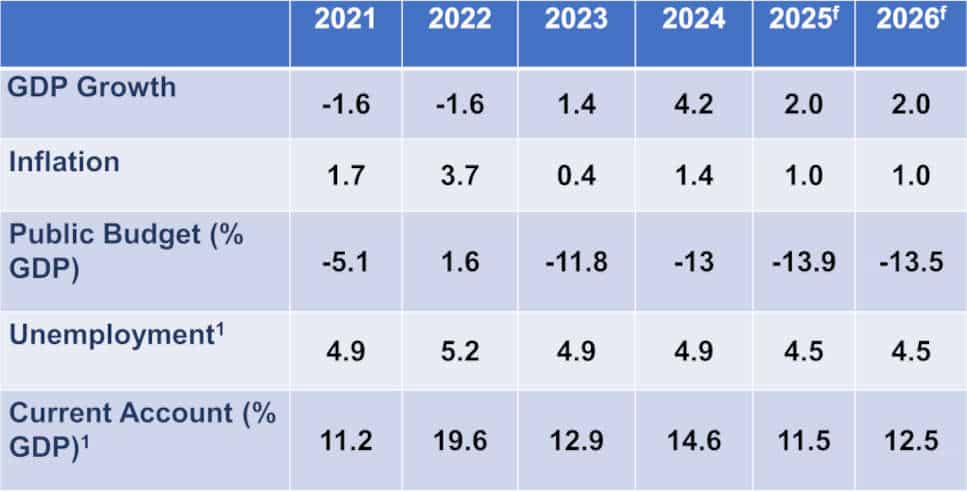
f – forecasts
1 – Trading Economics
Source: IMF/ADB, AMRO except where stated

Source: Worldbox
Useful links
https://www.transparency.org/en/cpi/2021
https://www.imf.org/en/Countries/BRN
https://www.state.gov/reports/2024-investment-climate-statements/brunei/
About Worldbox Business Intelligence
Switzerland-based Worldbox Business Intelligence is a global leader in business data and intelligence. With over 350 million companies across all major and emerging markets, our solutions support real-time onboarding, KYB, and compliance verification through the delivery of credit reports, profiles, ownership and management, legal status and history details as well as financial and other business information.
Accessible via API, online search, and the AWS MCP Servers, available over AWS marketplace, Worldbox enables organizations to search, evaluate, and acquire company data with transparent pricing and seamless AI integration.
With its global network and Swiss precision, Worldbox empowers smarter, more efficient business decision-making.
“Worldbox Business Intelligence – Bringing Swiss Precision To Data”
Copyright (C) 2025 Worldbox Business Intelligence. All rights reserved.
Our mailing address is:
Worldbox Business Intelligence
Breitackerstrasse 1
Zollikon
Zurich 8702
Switzerland