![[Aggregator] Downloaded image for imported item #12059](https://asiagategroup.com/wp-content/uploads/worldbox-indonesia-slider-3-3-26.jpg "[Aggregator] Downloaded image for imported item #12059")
Worldbox Country Risk Climate March 2026
INDONESIA
Summary
| Overall Risk Score 25/40
Political risk: Stable 6/10 Economic risk: Stable 6/10 Commercial risk: Stable 6/10 Technology risk: Stable 7/10 The risk assessment of a country is made up of four components, being Political, Economic, Commercial and Technological. Each component is scored out of 10 with 1 being the highest risk and 10 the lowest. |
ESG Risk: 6/10 (Stable)
Environmental, social and governance (ESG) |
Political Risk – Stable at 6
The Republic of Indonesia was created in 1945 after a long period of Dutch colonial rule and Japanese occupation during the Second World War. Indonesia is today the world’s third largest democracy (and largest Muslim democracy). A directly elected president serves as both head of state and of government. There is a maximum two-term (five years per term) limit on the presidency. A directly elected House of Representatives (the lower house of the bicameral People’s Consultative Assembly) acts as a counterweight to the president.
While now a democracy, Indonesia has experienced long periods of authoritarian rule. The mercurial and charismatic dictator Sukarno ruled the country from 1945 to 1967. General Suharto overthrew Sukarno in 1967, ruling until 1998 when he stepped down amid widespread unrest.
The current government is headed by President Prabowo Subianto who was elected in the February 2024 presidential election. Prabowo succeeded President Joko Widodo (popularly known as Jokowi), in October 2024. Prabowo is a former son-in-law of the late dictator Suharto. He was dismissed from the military in 1998 amid allegations of human rights abuses, which he has always denied.
The government appears to have successfully quelled the threat from the widespread protests that took place in August and September in the short term at least. The Prabowo administration deployed a two-pronged policy, arresting thousands while also paying funds to victims of the unrest. However, there is a consensus that genuine political and economic grievances triggered the protests and without addressing those issues, the potential for further unrest remains.
The economy grew by a seemingly impressive 5% in the first nine months of 2025 but that is well below Prabowo’s long-term target of 8%. Moreover, 5% growth is insufficient to absorb either the five million people who lost jobs during the COVID-19 pandemic or the expanding working age population into formal employment. The East Asia Forum publication explains that:
“According to the official statistics, four in every five jobs created since 2019 in Indonesia have been in the informal sector, and there were 31.5 million at the end of 2024 trapped in near poverty with no job security.”
There are concerns about the ability of the Prabowo administration to successfully navigate the serious economic challenges facing the country. Prabowo announced a bold deregulation agenda in April. But the reforms have not been implemented and the cost of production in Indonesia remains high compared to its peers and neighbours. Indonesia remains largely outside of the regional value chain, according to the East Asia Forum. The September decision to dismiss the highly-regarded finance minister Sri Mulyani Indrawati has also rocked investor confidence.
There are also concerns about the administration’s cohesion with reports that some elements sought to exploit the unrest. A report from Melbourne University, for example, citing the Indonesian publication Kompas said that during the riots, “some men wearing military uniforms were even filmed handing banknotes to the crowd, a rare act aimed at garnering public sympathy. The police, meanwhile, appeared lethargic in responding to the looting and were absent from any recorded footage of the events.”
The article from Melbourne University contends that a three-way power struggle involving Prabowo and his two predecessors, Joko ‘Jokowi’ Widodo and Megawati Soekarnoputri, chair of the Indonesian Democratic Party of Struggle, the nation’s largest party, seems to be the context behind the riots. It adds that “this centres on who controls the National Police, a powerful and coercive state institution that had built a strong alliance with Jokowi to expand its powers.”
Worldbox Business Intelligence believes that Indonesia’s political risk profile remains elevated. Prabowo seems certain to continue to adopt a paternalistic, authoritarian approach that will heighten concerns among pro-democracy activists that democracy is under threat. At the same time, many Indonesians continue to suffer severe economic hardship and further protests are possible, even likely, in 2026.
Economic Risk – Stable at 6
Indonesia is Southeast Asia’s largest economy and ranks 16th globally. It is the world’s fourth most populous country and is often touted as a future economic giant. The country has achieved remarkable economic growth during the past few decades and has achieved middle-income status. It now has ambitions to reach the high-income stage by 2045.
The country remains highly dependent on resources. The agricultural sector contributes 12.5% to the country’s GDP and employs 29% of the active population, while the mining sector also accounts for around 12% of GDP, driven by vast reserves of nickel (crucial for EVs), coal, copper, and tin, making it a global leader in key minerals and a strategic resource hub.
The economy is diversifying successfully however, with the services sector growing to account for around 45% of GDP, with industry making up the remainder.
The economy grew by 5.03% in 2024, the slowest pace in three years. And given the uncertainties facing the global economy in 2025, President Prabowo’s ambition of targeting annual growth of around 8% seems highly unlikely. Yet Indonesia needs to boost growth to a higher level to become a high-income country and to absorb the millions of workers in the informal economy or without jobs.
The East Asia Forum has highlighted the role of subsidies in Indonesia’s industrial development and their potentially damaging impact. The Forum highlights the fact that Indonesia’s pursuit of economic development has long been closely tied to robust industrial policy. This strategy has regained prominence amid the realignment of global supply chains and a push towards higher-value economic activities, it adds.
However, the Forum warns that subsidies consume a substantial portion of the state budget, crowding out potential spending in more productive areas. Moreover, the subsidies often lead to inefficiencies, as protected industries may lack the incentive to innovate and compete on a global scale. This creates a risk of subsidy reliance, where firms prioritise lobbying for continued state support over genuine productivity improvements.
The IMF, in its December 2025 Article IV consultation, appeared to recognise the dangers of these subsidies calling for the government to deregulate and implement other ambitious horizontal structural reforms including on infrastructure, reducing trade barriers, and further enhancing global integration – boosting the supply side of the economy and helping generate strong MSMEs, higher FDI and a dynamic private sector. Closing physical, human capital (education and skills) and institutional (governance and anti-corruption) gaps will also be critical to increase long-term growth and lift productivity, concluded the IMF.
Commercial Risk – Stable at 6
Corruption remains a challenge and acts as a major deterrent to business and investment. Indonesia was ranked 99th (out of 180 countries) in Transparency International’s Corruption Perception Index (CPI) for 2024, with a CPI score of 37 – up from 115th in the previous year. In terms of the Association of Southeast Asian Nations (ASEAN), Indonesia lies behind Singapore, Malaysia and Vietnam.
Indonesia’s economic freedom score (from the Heritage Foundation) is 65.2, and it ranks 60th in the 2025 Freedom Index, moving down from 53rd place in the 2024 Index. Indonesia is ranked 10th out of 39 countries in the Asia-Pacific region. The country’s economic freedom score is higher than the world and regional averages. Indonesia’s economy is considered “moderately free”, according to the 2025 Index.
Technology Risk – Stable at 7
The Global Innovation Index (GII), from the World Intellectual Property Organization, is an important index used by countries and multinational companies to assess innovation ecosystems and aid in policymaking and investment decisions.
Indonesia ranked 55th out of 139 countries in the 2025 GII, moving up from 85th place in 2020.
Indonesia jumped 13 places from 77th to 64th out of 193 countries in the E-Government 2024 Survey released by the United Nations Department for Economic and Social Affairs in September. Indonesia has improved its information and communications technology (ICT) infrastructure and expanded digital literacy programmes to improve access to e-government services, the report said.
Indonesia’s digital economy is among the fastest growing in Southeast Asia, projected to exceed $130 billion by 2025, according to a joint report by Google, Temasek, and Bain & Company. The country’s rapid internet penetration—and a young, tech-savvy population are key drivers of this growth.
Government policies
According to the International Trade Administration of the US, the government has positioned the digital economy as a cornerstone of its broader economic development strategy. Central to this ambition is the “Making Indonesia 4.0” roadmap, which aims to position the country as a leading digital economy by 2030. This plan is underpinned by significant government initiatives, including the “100 Smart Cities” program and the “National Strategy for Artificial Intelligence (2020-2045),” both designed to enhance digital infrastructure, boost innovation, and integrate advanced technologies across various sectors.
The government’s commitment is further evidenced by the Digital Indonesia Roadmap 2021-2024, which outlines specific goals for expanding digital infrastructure, increasing the digital skills of the workforce, and encouraging the adoption of digital technologies in businesses, particularly small and medium-sized enterprises (SMEs). The roadmap also emphasizes e-commerce, fintech, and the acceleration of digital transformation in public services, intending to create a more inclusive digital economy.
Indonesia’s Ministry of Communication and Information Technology (Kominfo) plays a pivotal role in driving these strategies, with a focus on expanding internet access, developing a comprehensive 5G network, and promoting cybersecurity measures. The government also plans to establish a national data centre and strengthen regulatory frameworks to attract more investment in the digital sector.
In December 2025, the World Bank urged the government to address the challenges facing the digital economy to realise its full potential. It said that while access to the Internet has expanded rapidly, the quality and usage remain uneven: average internet speeds are falling behind regional peers, and many users in rural areas, schools and health clinics lack high-speed connections. Local data centre capacity is expanding but requires a more supportive investment and regulatory environment to reach its full potential.
Infrastructure
Over the past decade, Indonesia has dramatically increased its internet penetration from 34.9% to 79.5%, or around 221 million people, according to the Director of the Telecommunication and Information Accessibility Agency (BAKTI) at the Ministry of Communication and Informatics, speaking in September 2025. Earlier the government had outlined its Indonesia Digital 2045 Vision, which calls for a 30-fold improvement in internet speed.
Education and skilled staff
Basic education is almost universal in Indonesia, but the quality is often poor, with significant variation across provinces, contributing to a shortage of skilled workers, according to the OECD. It calls for the continuation of campaigns to strengthen skills training, including through incentives for employers. It adds that in primary and secondary education, harmonising curricula and increasing funding is essential. However, Indonesia still ranks as the seventh largest producer of STEM graduates globally, with 300,000 arriving on the market each year.
March Bulletin
Political Risk – Stable at 6
IRIS, the French Institute for International and Strategic Affairs, one of the leading French think tanks specialising in geopolitical and strategic issues, believes – like Worldbox Business Intelligence – that the political environment will remain potentially volatile due to economic inequalities and a fear that democracy could be under threat.
IRIS points out that economic inequalities are unlikely to be reduced during the current presidential term due to announced budget cuts affecting infrastructure projects and key sectors such as education and health. These cuts aim to reduce the budget deficit inherited from the previous administration and finance Prabowo flagship (and controversial) programme to provide free nutritious meals to all schoolchildren.
It adds that politically, Indonesians have witnessed a gradual weakening of democracy, which has increased their mistrust of both parliamentary and governmental representatives. It cites several factors as contributing to this democratic decline. These include the persistence of political dynasties that has perpetuated the same elites, while President Joko Widodo’s terms of office saw the weakening of independent institutions such as the Corruption Eradication Commission and the Constitutional Court.
IRIS adds that Prabowo’s rise to power has contributed to a recentralisation of power and a strengthening of the executive, notably by expanding his cabinet and weakening the political opposition, now limited to the PDI-P party. Moreover, says IRIS, the recent expansion of the military’s involvement in civilian affairs has raised fears of a possible return of the “dwifungsi” — the dual political and military function of General Suharto’s regime.
IRIS concludes, again like Worldbox Business Intelligence, that If no response is given to the structural issues raised by the wave of protests, demonstrations could resurface at a later date.
Economic Risk – Stable at 6
The IMF and the World Bank both released reports in December 2025 that praised Indonesia’s economic resilience yet also acknowledged that growth will remain far below the levels needed to address the country’s economic challenges in the coming years. The IMF, in its latest Article IV assessment, forecasts growth of 5.0% in 2025 and 5.1% in 2026, helped by supportive fiscal and monetary policies.
The IMF added that headline inflation was well anchored and projected to converge towards the midpoint of the target range. It expects that the current account deficit would remain well contained in 2025-26, with “comfortable” reserves.
However, the World Bank warned that despite macroeconomic stability, labour market challenges persist, impacting household welfare. It added that the economy is creating jobs for most labour entrants, but it is doing so mostly in low-value added sectors with many failing to pay middle-class wages.
Bank Indonesia held its benchmark interest rate steady at 4.75% in December. This marks the third consecutive meeting with no change to the 7-day reverse repurchase rate. The decision also left the overnight deposit and lending rates unchanged at 3.75% and 5.50%, respectively. The move came amid persistent pressure on the rupiah and ongoing global market uncertainty. December’s rate freeze follows cumulative cuts of 150 bps since September 2024, that brought the rate to its lowest level since October 2022 to support economic growth.
The scope for further rate cuts will depend on the performance of the rupiah, which has been one of emerging Asia’s weakest currencies against the US dollar this year. The central bank will be wary of cutting rates and weakening the rupiah further for fear of the impact on inflation, which rose to an annual pace of nearly 3% in September. The central bank aims to maintain inflation within the target range of 2.5% plus or minus one percentage point.
The OECD reported in December 2025 that fiscal policy is likely to have to have proven moderately expansionary in 2025 as increased spending on a free meals programme and the creation of a new sovereign wealth fund was only partially financed by spending cuts elsewhere. The OECD expects fiscal policy to turn broadly neutral over 2026-27. It adds that raising the efficiency of public spending is a key policy priority, including through improved targeting of social benefits to vulnerable households.
Indonesia recorded FDI of $38.9bn in the first nine months of 2025, suggesting inflows could fall below the $55.3 billion recorded in the whole of 2024. The top 5 FDI source rankings remained unchanged compared to the first half statistics. Singapore remained the biggest source at $12.6bn in January-September. Hong Kong ($7.3bn), China ($5.4bn), Malaysia ($2.7 bn), and Japan ($2.3bn) were the other major investors.
Commercial Risk – Stable at 6
In its December 2025 Article IV statement that IMF reported that “the financial system is broadly resilient. Amid a negative credit gap, a near-term accommodative macroprudential stance is appropriate. Looking forward, gradually starting a shift towards a neutral stance as credit growth builds pace would safeguard against potential macro-financial risks.”
Technology Risk – Stable at 7
The next wave of 5G investment in Indonesia can unlock a further US$41 bn in GDP for the economy between 2024 and 2030, underscoring the transformative economic impact of digital connectivity, according to a December 2025 report by GSMA Intelligence. A recent GSMA Intelligence survey of more than 580 companies across ASEAN shows firms in Indonesia expect to channel an average 10% of their revenues into digital transformation between 2025 and 2030, above both the ASEAN (10.4%) and global (9.8%) averages.
Environmental, Social and Governance (ESG) – Stable at 6
The United Nations’ Sustainable Development Goals (SDGs) are recognized as a beneficial framework for responsible investment. The Sustainable Development Report from Cambridge University Press assesses the progress of all UN Member States on the SDGs. It provides a useful means of ranking Southeast Asian countries on their ESG progress.
Indonesia is ranked 77 out of 167 in the 2025 report, with a score of 70.2.
Environment: Issues facing Indonesia include deforestation, water pollution from industrial waste and sewage, and air pollution in urban areas. Over 6 million people in Jakarta were reportedly affected by acute respiratory infections due to worsening air pollution in 2025. Meanwhile, around 197 million Indonesians lack access to safe water and 8 million lack access to improved sanitation. Both the public and private sectors have recognised that financing for household water and sanitation solutions is a growing need.
Deforestation increased in 2024 to its highest level since 2021, with forest area four times the size of Jakarta lost, according to Mongabay, an independent media outlet. Alarmingly, it added that 97% of the deforestation occurred within legal concessions, highlighting a shift from illegal to legal deforestation. In December 2025, the government pledged to revoke the permits of mining companies found to have violated the law in Sumatra, in the wake of cyclone-induced floods and landslides that environmentalists claim were exacerbated by years of deforestation. The disaster left about 800 people dead and 564 missing across the three provinces of West Sumatra, North Sumatra, and Aceh.
Social: The law provides, with some restrictions, for the rights of workers to join independent unions, conduct legal strikes, and bargain collectively. The law prohibits antiunion discrimination. Most workers are not covered by the minimum wage laws. However, the authorities only enforce labour regulations, including minimum wage regulations, in the formal sector, which employs around 4 in 10 workers. Those in the informal sector have few protections.
Governance: Indonesia continues to bring its legal, regulatory, and accounting systems into compliance with international norms and agreements. However, the regulations and enforcement are not yet up to international standards for shareholder protection. Indonesian businesses are required to undertake responsible business conduct (RBC) activities under Law No. 40/2007 concerning Limited Liability Companies.
March Bulletin
Environmental, Social and Governance (ESG) – Stable at 6
Ken Research of India released a strategic market analysis entitled “Indonesia ESG Investing Market” in December 2025 that revealed that the current market size is valued at US$6.1bn, based on a five-year historical analysis. The study forecast that the market is poised to expand, driven by Indonesia’s strong regulatory push toward sustainability disclosures, rising investor demand for climate-aligned and socially responsible assets, growing issuance of green and sustainability-linked financing instruments, and accelerating corporate transition efforts supported by national commitments to renewable energy, carbon reduction, and ethical governance practices.
Latest economic data
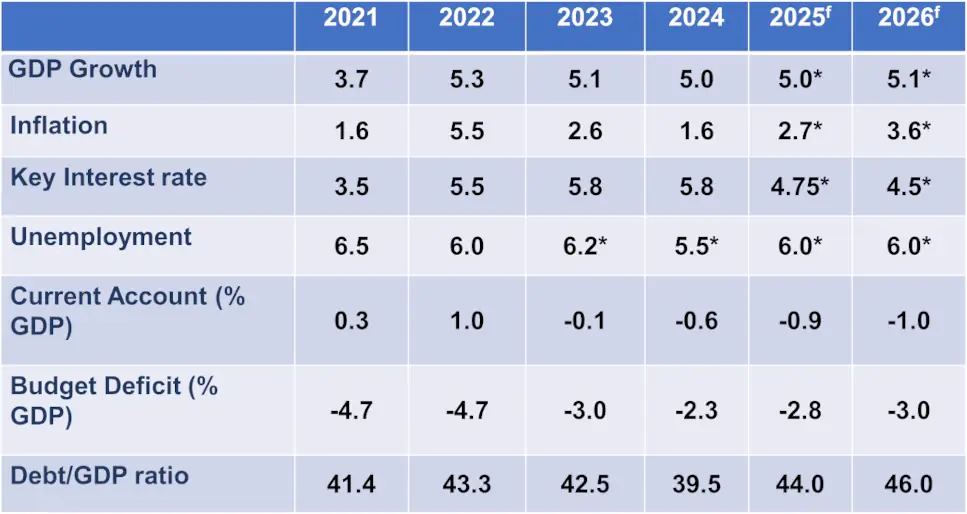
f forecasts
* Worldbox Business Intelligence
Source: International Monetary Fund, unless otherwise stated
Useful Links
https://www.adb.org/countries/indonesia/main
https://www.transparency.org/en/cpi/2021
https://www.imf.org/en/Countries/IDN
https://www.thejakartapost.com/
https://www.abc.net.au/news/topic/indonesia

Source: Worldbox
About Worldbox Business Intelligence
Switzerland-based Worldbox Business Intelligence is a global leader in business data and intelligence. With over 400 million companies across all major and emerging markets, our solutions support real-time onboarding, KYB, and compliance verification through the delivery of credit reports, profiles, ownership and management, legal status and history details as well as financial and other business information.
Accessible via API, online search, and the AWS MCP Servers, available over AWS marketplace, Worldbox enables organizations to search, evaluate, and acquire company data with transparent pricing and seamless AI integration.
With its global network and Swiss precision, Worldbox empowers smarter, more efficient business decision-making.
“Worldbox Business Intelligence – Bringing Swiss Precision To Data”
 |
 |
 |
 |
Copyright (C) 2026 Worldbox Business Intelligence. All rights reserved.
Our mailing address is:
Worldbox Business Intelligence
Breitackerstrasse 1
Zollikon
Zurich 8702
Switzerland