Worldbox Country Risk Climate – November 2026
LAOS
Summary
Overall Risk Score
20/40 – Stable (Unchanged)
| Political risk: 7/10 – Stable (Unchanged)
Economic risk: 5/10 – Stable (Unchanged) Commercial risk: 4/10 – Elevated (Unchanged) Technology risk: 4/10 – Elevated (Unchanged) A country’s risk rating is based on four areas: political, economic, commercial and technological risk. Each area is scored from 1 to 10, where 1 is the highest risk and 10 is the lowest. |
ESG Risk: 4/10 – Elevated (Unchanged)
Environmental, social and governance (ESG) risk is increasingly important to companies, investors and consumers across Southeast Asia. Our quarterly country risk reports therefore include a separate ESG score and analysis of each country’s environmental, social and governance performance, along with recent developments. |
Political Risk November Update
Stable at 7
Vietnam relations with Laos could be affected by the arrival of light attack aircraft and military vehicles at a new China-Laos joint training facility. In late September, China’s defence ministry announced it had set up the facility at Ban Keun outside the capital Vientiane. Its construction potentially marks China’s first fully fledged overseas military base in Southeast Asia. That could rattle other ASEAN members, particularly as analysts say the airfield could in future serve larger aircraft, including signals intelligence and electronic-surveillance planes to extend China’s reach into Southeast Asia.
Laos relations with Australia and several Western governments are coming under strain due to the Lao government’s perceived failure to adequately punish those responsible for the deaths of foreign tourists in Laos as a result of methanol poisoning. Two Australian teenagers died in 2024 after consuming alcoholic drinks laced with methanol. Two Danish citizens, a British citizen and an American also died after drinking the shots.
Following a long investigation, Lao authorities announced In July that the owner of a distillery had been charged in connection with the incident, with the charges carrying a penalty ranging from three months to four years’ imprisonment, as well as a $1,600 fine. The leniency of the charges prompted anger from the Australian victims’ relatives and a strong rebuke from Canberra. Foreign Minister Penny Wong said her government was “deeply frustrated and bitterly disappointed that authorities in Laos are not pursuing the most serious charges in relation to the methanol poisoning deaths.”
A UK Foreign Office spokesperson said the “bereaved families have endured a long and painful wait for answers” adding that the latest update was “undoubtedly a source of further grief and frustration”. The Danish foreign ministry statement cited Foreign Minister Lars Løkke Rasmussen as declaring that he was deeply disappointed that the indictment didn’t reflect the seriousness and extent of the tragedy affecting so many families.
Political Risk – Context
The Lao People’s Democratic Republic, as Laos is officially known, has been a one-party state since its foundation in 1975 at the end of the Indochina war. The only legal party is the Lao People’s Revolutionary Party (LPRP). There is no organized opposition and no truly independent civil society. A 61-member Central Committee of the LPRP, under the leadership of the 11-member Politburo, makes all major decisions. National Assembly elections are held every five years but are not free or fair, while protests are banned.
Just when it appeared that the economic crisis triggered by the Covid-19 outbreak was coming to an end, Laos now faces a fresh challenge from the fallout from the conflict in the Middle East, which has triggered a sharp increase in energy costs and fuel shortages. Overall inflation jumped to double figures in April 2026 heaping further pressure on a population whose living standards have fallen sharply over the past five years.
The government has responded to slumping growth by carrying out significant reforms including merging major ministries to cut costs. According to a November 2025 article in East Asia Forum, a highly-respected Australian publication, the reforms laid the groundwork for “a generational shift towards a more technocratic style of government.” The article argued that leading elites such as those from and close to President Sisoulith, Prime Minister Siphandone and Phomvihane (Kaysone Phomvihane was one of the first leaders of the LPRP) families remain at the core of the Party and hold executive control. But it added that Laos’s emerging technocratic elite appears poised to play a more prominent role in economic management.
The East Asia Forum believes two scenarios are possible. In the first, revolutionary veterans retain their hold on power for another five-year term but are likely to give more authority to technocrat cadres in party and government positions. In the second, revolutionary veterans retire, and a cohort of technocrat cadres fill key positions with expanded mandates.
Events at the three-day 12th National Congress of the LPRP in January do appear to indicate that a transition is underway. The Diplomat reported that the Congress marked a partial generational transition within the party, inducting five new Politburo members, who replaced revolutionary veterans born in the late 1940s and early 1950s. General Secretary Thongloun Sisoulith was re-elected and, according to the Diplomat, his vision of an independent, self-reliant economy will shape policy and strategic priorities for 2026 and beyond. This vision reflects concerns about the country’s dependence on China and its reliance on hydropower and resource exports. The government wants to diversify the economy by developing manufacturing, modernising agriculture and promoting tourism.
Overall, however, Worldbox Business Intelligence does not believe that Laos’ political stability is at risk even as living standards remain under pressure. There is no organised or credible opposition. Hundreds of thousands of Laotians have already left the country and Worldbox Business Intelligence believes this exodus will continue, acting as a safety value, and also meaning that street protests are unlikely.
Remittances from abroad also keep many families economically afloat. Lao migrant remittances have surged, according to loal media. They reached around $500 million by mid-2026, averaging about $4.5 million per month.
Economic Risk November Update
Stable at 5
Economic conditions and growth improved in 2025 and early 2026, but Laos remains structurally vulnerable to external shocks, with underlying debt pressures compounding risks, according to the latest Lao Economic Monitor from the World Bank.
The Monitor found that growth strengthened to 4.8% in 2025, supported by tourism and transport, and exports of electricity and electrical equipment. Foreign investment remained buoyant, particularly in the resource sector. Tighter macroeconomic policies helped stabilise the exchange rate and slowed inflation in 2025. The external position improved amid a larger current account surplus, underpinned by strong exports and increased foreign investment. This helped to lift international reserves to a record $4.2 billion in March 2026, equivalent to 3.8 months of imports.
The global oil market disruption in early 2026 triggered a sharp spike in Laos’ domestic fuel prices, with gasoline and diesel nearly doubling at their peak, driven almost entirely by import costs. The government responded by cutting excise taxes and suspending levies. However, inflation is expected to rise to close to double digit level in 2026.
Growth is projected to moderate to 3.8% in 2026 due to higher costs and weaker external demand. Higher fuel import costs will narrow the current account surplus, limit the scope for fiscal support, and further reduce the resources available for public spending. Persistent structural challenges include elevated public and publicly guaranteed debt, limited fiscal space for human capital investment, foreign exchange reserves that are still low relative to demand, labour and skills shortages, and low productivity.
Laos is heavily dependent on fuel imports from the Middle East. Around 97% of its fuel and diesel flow in from Thailand, which sources the energy from The Middle East. Thailand has been suffering severe fuel shortages and a sharp rise in the price of diesel but has continued to supply fuel to Laos. Imports of oil into Thailand have surged as Thai refiners seek to diversify supplies, so Laos is unlikely to suffer from fuel shortages but the price of the energy to the end user is likely to surge further unless oil prices fall sharply.
Economic Risk – Context
Despite rapid economic growth over much of the past two decades, Laos remains one of the poorest countries in the world. About two-thirds of the population live in rural areas, with many working in agriculture. Yet agriculture contributes only 15% to GDP. Therefore, earnings and farm incomes remain low, and many Laotians lack access to enough safe and nutritious food to meet their dietary needs, according to the World Bank.
The country has experienced extreme economic distress over the past few years, with many Laotians seeing their incomes under pressure from rising inflation, due to a sharply devaluing currency, rising public debt and unemployment.
Encouragingly, Laos has shown greater resilience to the global oil shock triggered by the Middle East conflict in 2026, according to a July 2026 report by the ASEAN+3 Macroeconomic Research Office (AMRO). It said this resilience was supported by sustained policy adjustments that helped lower inflation, stabilise the kip, rebuild foreign reserves, and improve debt dynamics. Continued policy discipline will be essential to preserve macroeconomic stability, reduce fiscal and external vulnerabilities, and strengthen resilience to future shocks, concluded AMRO.
AMRO, however, warned that near-term risks have risen with the Middle East conflict. A prolonged period of high oil prices could slow economic growth, push up inflation, and widen the fuel import bill. Stronger demand for foreign currency could weaken confidence in the kip and increase the use of foreign currencies, adding pressure on the exchange rate.
AMRO also highlighted significant fiscal and external factors that reflect high foreign-currency public debt and large financing needs. Uncertainty over future debt deferrals and restructuring arrangements, together with contingent liabilities, could further intensify liquidity pressures, particularly if global financing conditions tighten, added AMRO.
Commercial Risk November Update
Elevated at 4
The World Bank says that the Laos banking sector remains fundamentally adequately capitalized. However, the sector faces critical vulnerabilities driven by currency depreciation, high inflation, and heavy exposure to public debt. While institutional measures have improved, the sector continues to grapple with liquidity constraints and non-performing loans.
In July 2026, AMRO said that financial sector reforms should focus on strengthening bank capital and provisioning buffers, accelerating the resolution of non-performing loans, and preserving bank lending to support economic activity. Developing a more active interbank market would also improve liquidity management and strengthen monetary policy transmission.
Commercial Risk – Context
Corruption is a significant challenge. Laos ranks 109th out of 182 countries in Transparency International’s (TI) 2025 Corruption Perceptions Index, moving dramatically up from its 2023 place of 136th. In the ASEAN region, Laos is placed ahead of Thailand, the Philippines and ahead of Myanmar and Cambodia.
The US State Department’s mid-2025 Investment Climate Statement reports that Laos’ government is increasingly tying its fortunes to the economic integration of ASEAN and export-led development, and has prioritised the digital economy, logistics, green growth, and more sustainable development, in addition to continuing to develop agriculture and resource extraction.
However, it adds that corruption, policy and regulatory ambiguity, and uneven application of laws are disincentives to further foreign investment. The multiple ministries, laws, and regulations affecting foreign investment in Laos create confusion and require potential investors to engage either local partners or law firms to navigate an opaque and cumbersome bureaucracy. The government has attempted to streamline business registration using a one-stop shop model. While businesses acknowledge that this is an improvement, they add that several additional steps must still be taken outside of the single stop. Businesses also complain that there are often different registration requirements at the central and provincial levels.
Technology Risk November Update
Elevated at 4
Laos has announced a major drive to encourage the use of electric vehicles (EVs) with the aim of reducing its dependence on oil imports. The government has largely suspended the import of gasoline and diesel vehicles until the end of 2026. By 2030, the government plans for electric vehicles to account for more than 30% of the country’s vehicle fleet. To support this transition, Laos is also adjusting its tax policies. Battery-electric vehicles valued at less than $50,000 will be exempt from consumption tax. For more expensive electric vehicles and other alternative powertrains, the government will consider special tax rates.
Technology Risk – Context
The Global Innovation Index (GII), from the World Intellectual Property Organisation, is an important index used by countries and multinational companies to assess innovation ecosystems and aid in policymaking and investment decisions.
Laos ranked 109th out of 139 countries in the 2025 GII – moving up from 113th place in 2020. Lao PDR ranks 22nd among the 37 lower middle income group economies. It ranks 16th among the 17 economies in Southeast Asia, East Asia, and Oceania.
Government policies
In January 2026, the government reaffirmed its commitment to advancing digital transformation as a key driver of national development, continuing efforts to enhance e-government services, develop a digitally skilled workforce, and promote overall digital growth. Around 63% of the population now has access to the internet, up from 43% in 2020, while the national fibre-optic network has expanded to over 36,000 kilometres, with 4G coverage reaching 76% of villages. In addition, 5G services have been launched in 59 districts.
Progress has also been made in digital government, with the government intranet network connecting all ministries and provinces. To support business and innovation, the ministry has strengthened legislation and strategic plans covering e-government services, cybersecurity, and startup promotion.
Laos is holding a digital week in October 2026 to promote the use of modern technologies in socio-economic development, while raising public awareness of the country’s transformation towards modern industries and the development of its digital economy and society.
Infrastructure
Laos has benefited from major upgrades to its infrastructure in recent years. The country’s 2026–2030 national development plan aims to continue this trend and transition the country from a landlocked state to a connected regional hub. Major Transport Projects include:
- Construction has begun on a US$6.6 billion, 562-kilometer international railway linking Vientiane to the Vung Ang deep-water port in Vietnam.
- Work has also begun on the US$1.9 billion Vientiane-Hanoi expressway. Laos aims to complete the project by 2029.
- Part of the US$7.1 billion Laos-China Expressway, a 440 km route connecting Vientiane to Boten at the Chinese border has already been built.
Much of Vientiane can access 5G and Lao Telecom has plans to extend that network nationwide. 4G and 3G coverage extends to all major population centres as well as many towns and villages along highways, but coverage in rural and mountainous areas remains patchy.
Average mobile internet speeds in Laos have improved substantially in recent years, thanks to the adoption of newer network technologies such as 4G. According to data from Ookla’s Speedtest Global Index, Laos ranked 85th in the world for mobile speeds and 105th for fixed broadband speeds during February 2026.
Education and skilled staff
Laos does not officially participate in the standard OECD Programme for International Student Assessment (PISA). Thus, unlike other ASEAN countries, results from the latest 2025 survey are not available for the country.
According to UNICEF, Laos still has some of the poorest education indicators in Southeast Asia. Approximately 70% of 5-year-old children are not enrolled in Early Childhood Education programmes, with those in hard-to-reach areas and from poor families being the most excluded. Many of them do not speak the Lao language, which is the official language of instruction. Moreover, only 81.9% of enrolled children complete primary education, and, according to UNICEF, learning outcomes are low, leaving children without essential knowledge and skills. Meanwhile, thousands of students drop out of higher education, vocational education and teacher training, according to officials . In many cases, this is due to financial hardship.
Unsurprisingly, against this background, Lao employers report that they cannot find the skilled workers they need to grow their businesses. Information and communication technology is among the worst-affected sectors. The shortages are being exacerbated by the country’s economic problems, which are motivating the most skilled staff to move abroad.
Environmental, Social and Governance (ESG) November Update
Elevated at 4
Laos has issued its first Green Bond. The Private Infrastructure Development Group (PIDG), a multi-government-funded organization set up in 2002 to invest in infrastructure projects in developing countries, has invested US$300,000 – through its project development solution, InfraCo – in a green bond issued by LOCA, Laos’ largest ride-hailing and electric vehicle charging service provider.
Environmental, Social and Governance (ESG) – Context
The United Nations’ Sustainable Development Goals (SDGs) are recognized as a beneficial framework for responsible investment. The Sustainable Development Report from Cambridge University Press assesses the progress of UN Member States on the SDGs. It provides a useful means of ranking Southeast Asian countries on their ESG progress.
Laos is ranked 122 out of 169 in the 2026 report, with a score of 62.5.
Environment – Laos is amongst the most vulnerable countries to projected climate change trends, facing significant climate-related hazards that are exacerbated by poverty, malnourishment, and high exposure of poor and marginalized communities. Floods and droughts are among the most significant threats.
The floods that devastated large areas of the country in August and September highlight the environmental threats facing Laos. More than 30 villages in Luang Namtha alone were hit. Initial reports point to damage to homes, farmland, roads, schools and other infrastructure. The province was declared a disaster zone in August because of the severity of the flooding.
Social – Laos scores very lowly in this area. According to the US State Department, key concerns include credible reports of: arbitrary detention; political prisoners; serious problems with the independence of the judiciary; serious restrictions on free expression and media, including censorship and the use of criminal defamation laws; serious restrictions on internet freedom; substantial interference with the freedom of peaceful assembly and freedom of association; and the inability of citizens to change their government peacefully through free and fair elections.
Governance – Laos also rates very poorly in terms of governance with high levels of corruption and very weak rule of law as outlined in the commercial risk section.
Latest economic data
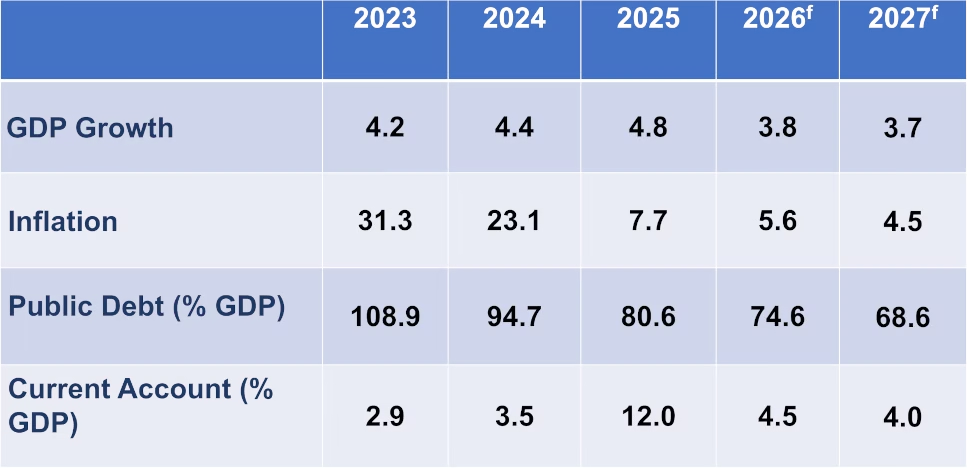
f – forecasts
Source: AMRO/Bank of the Lao PDR/Worldbox Business Intelligence estimates and forecasts.
Useful Links
https://www.transparency.org/en/cpi/2021
https://www.imf.org/en/Countries/LAO
https://www.adb.org/countries/lao-pdr/main

Source: Worldbox
Global Business Information from Worldbox
Worldbox provides trusted business information on more than 500 million companies across developed and emerging markets.
Access company profiles, credit risk reports, ownership and management details, legal status, financial information and other data to support onboarding, KYB, compliance and risk assessment.
Worldbox data is available through online search, API, Snowflake’s data platform, AWS Marketplace, and AI-ready access through AWS MCP Servers.
Need reliable information on a company or market? Contact Worldbox to discuss your requirements.

 |
 |
 |
 |
Copyright (C) 2026 Worldbox Business Intelligence. All rights reserved.
Our mailing address is:
Worldbox Business Intelligence
Breitackerstrasse 1
Zollikon
Zurich 8702
Switzerland