Worldbox Business Intelligence Risk Rating – November 2026
MYANMAR
Summary
Overall Risk Score
12/40 – Elevated (Unchanged)
| Political risk: 3/10 – Elevated (Unchanged)
Economic risk: 3/10 – Elevated (Unchanged) Commercial risk: 3/10 – Elevated (Unchanged) Technology risk: 3/10 – Elevated (Unchanged) A country’s risk rating is based on four areas: political, economic, commercial and technological risk. Each area is scored from 1 to 10, where 1 is the highest risk and 10 is the lowest. |
ESG Risk: 3/10 – Elevated (Unchanged)
Environmental, social and governance (ESG) risk is increasingly important to companies, investors and consumers across Southeast Asia. Our quarterly country risk reports therefore include a separate ESG score and analysis of each country’s environmental, social and governance performance, along with recent developments. |
Political Risk November Update
Elevated at 3
In the last report, we wrote about the divisions within ASEAN about how to approach Myanmar. The grouping has been divided into two camps. In the first, Singapore, Malaysia and Indonesia want to stick to the 2021 Five-Point Consensus. This calls for: the restoration of peace and stability in Myanmar; an end to violence and an inclusive dialogue with “all parties” before an election is held. It also pushed for humanitarian access to help victims of the violence and an appointment of a special envoy for Myanmar as ASEAN’s point person to engage with its troubled member. In the other camp are Thailand, Laos, Brunei and Cambodia who want to re-engage with Myanmar.
But there are also clear divisions at the global level too. In September 2026, the United Nations’ human rights chief, its Independent Investigative Mechanism for Myanmar, and the European Union told the Human Rights Council that the government is bombing, torturing and conscripting its own citizens. Yet two members of the UN Security Council are providing key support to the military regime. Russia is the primary international and military patron of the junta, providing crucial weapons, diplomatic shielding, and economic cooperation.
In June, Chinese President Xi Jinping endorsed the political leadership of his Myanmar counterpart, Min Aung Hlaing, as the two met in Beijing to map out the future development of bilateral ties. Beijing has invested heavily in Myanmar under its Belt and Road Initiative. Projects include an oil and gas pipeline crossing the country and a planned deep-sea port. Many of the projects are located in active combat zones and have faced threats and attacks.
Support from Russia and China suggests that the military regime will be able to cling on indefinitely even though the bulk of the population appears to have turned against it. Divisions with the opposition are also enabling the military to regain ground in the long-running war. In August, the military was reported to have recaptured much of the northern part of Chin State next to Bangladesh and India. The opposition’s gains in 2023 and 2024, when they appeared to be on the brink of victory, have given way to a steady withdrawal from the urban centres they had captured.
Political Risk – Context
The 2021 military coup that overthrew the government of Aung San Suu Kyi triggered the current bout of fighting. But in truth the country has been in a state of civil war since 1948, when the country, then known as Burma, gained independence from the British Empire. Deep ethnic divisions between the majority Bamar population and ethnic minority groups have fuelled the fighting.
Following a coup in 1962, General Ne Win took and held power for the next twenty-six years. Ne Win pursued an isolationist foreign policy and a socialist economic programme that nationalized Burma’s major enterprises. Ne Win repeatedly demonetized the national currency by sudden decree without compensation, wiping out citizens’ savings and triggering major economic chaos. The economic situation deteriorated rapidly, and a black-market economy took hold.
In 1990, Myanmar held its first general election since the 1962 military coup. The National League for Democracy (NLD), led by Aung San Suu Kyi, won by a landslide. Suu Kyi, the daughter of the nationalist leader who fought for Burma’s independence and the most prominent democratic activist, was placed under house arrest by the junta before the vote. After the election, the junta refused to recognize the results. It embarked on a brutal crackdown on the NLD and its supporters with many supporters joining ethnic rebels in the fight against the army.
In 2015, Myanmar held its first nationwide, multiparty elections. Suu Kyi’s opposition NLD party again won a landslide victory. Suu Kyi became the de facto head of the civilian government, but the military retained control over domestic security, most aspects of foreign relations, and many other matters related to domestic policy.
Since the intensification of fighting in 2021, the civil war has killed over 100,000 people and displaced 5.2 million. Resistance forces and ethnic armies control an estimated 40% of the country against the junta’s 21%. Junta leader Min Aung Hlaing assumed the presidency in April 2026 under a nominally civilian government widely dismissed as a façade for military rule.
Economic Risk November Update
Elevated at 3
Myanmar’s economy was showing tentative signs of stabilization prior to the Middle East conflict, but activity remained weak and under strain, according to the latest Myanmar Economic Monitor released by the World Bank in June.
The World Bank believes that economic activity improved modestly through late 2025 and early 2026, supported by partial normalization after the March 2025 earthquake, some easing of power supply constraints, and pockets of resilience in manufacturing, construction, and services. However, output, sales, and profits remained well below pre-2021 and pre-earthquake benchmarks, reflecting continued constraints from power supply, weak demand, and limited policy space.
Real GDP is estimated to have contracted by 2.0% in the fiscal year 2025/26, despite modest improvement in activity toward the end of the fiscal year. The fuel shock driven by the Middle East conflict has amplified existing economic pressures. The country imports 90% of its fuel oil, leaving it highly exposed to closure of the Strait of Hormuz since the start of the US war on Iran.
Higher fuel prices have raised transport and logistics costs, increased production and distribution costs, and intensified foreign exchange demand for fuel imports. After easing through late 2025, inflation rose sharply from March 2026, reaching 24.6% year-on-year in April.
Economic Risk – Context
Given the civil war raging in the country, it’s very difficult to gain an accurate picture of what is happening to the economy. Even the World Bank’s figures must be treated with scepticism. The junta hasn’t published monthly economic data since mid-2022, and figures from the World Bank and other organisations are at best “guesstimates” of what is happening in the country. They could well be wildly inaccurate.
The junta’s economic policies are also damaging the country’s long-term prospects, according to the East Asia Forum. These policies include import substitution policies, state-enforced loan defaults on foreign lenders, excessive military spending, overprinting of domestic currency and the squeezing of dwindling foreign exchange reserves to fund military operations and circumvent sanctions.
The World Bank reports that in 2025 poverty levels hit 29.9% – “still far above pre-2021 trends.” Those figures are likely to have worsened in 2026 given rising food and fuel prices. Myanmar’s Permanent Representative to the United Nations, Ambassador Kyaw Moe Htun, said in April that the country’s middle class was disappearing as poverty rates climbed. He warned that declining job opportunities, the outflow of skilled workers, the erosion of human resources, and the deterioration of education and healthcare services are all undermining Myanmar’s long-term development prospects.
Commercial Risk November Update
Elevated at 3
Commercial risk has increased significantly since the coup, amid a deterioration in the ability of government ministries and the banking and legal systems to function effectively.
According to the well-regarded Fulcrum publication of Singapore, Myanmar has undertaken efforts to improve its technical compliance with the FATF’s recommendations on anti-money laundering and countering the financing of terrorism (AML/CFT). That followed the country being labelled a “Jurisdiction of Concern” by the Financial Action Task Force (FATF) in 2022. However, Fulcrum adds that the regime is using AML/CFT compliance less to address actual money laundering, and more as a tool to compel individuals and businesses to use the state-controlled financial system.
Commercial Risk – Context
Myanmar was rated as one of the most difficult countries in the Asia–Pacific region in which to do business even prior to the military coup and escalating civil war.
Since the coup, the banking system has been disrupted significantly. Sending money out of Myanmar is extremely difficult, with much stricter oversight by the central bank, harming international trade and commerce. Access to and use of the internet has also become more difficult, with internet shutdowns common, and the disruptive effect on business activity has been magnified by the coronavirus and the associated need for remote working. Privacy and data-security concerns have also increased. Entering, leaving and moving around the country are difficult, with staff safety concerns a major issue given the deteriorating security situation in many areas of the country.
Meanwhile, government decision-making and the administrative process are much slower and less predictable, affecting even routine matters such as tax administration and visa processing. Senior government personnel in many positions have changed, while new policies have been adopted, and the civil disobedience campaign has severely disrupted administrative processes.
The rule of law has suffered further setbacks. Even prior to the pandemic, businesses reported very low trust in the independence of the judiciary, with bribes and irregular payments in exchange for favourable judicial decisions very common.
In terms of corruption, Myanmar ranks 169th out of 182 countries in Transparency International’s 2025 Corruption Perceptions Index, moving down one place over the course of the year. In February 2026, Lieutenant General Tun Tun Naung, was sacked as Minister of Home Affairs in late January, and subsequently expelled from the military for allegedly taking protection payments from a scam syndicate.
A lack of adequate infrastructure also provides significant challenges to operating in Myanmar. Sanctions levied since the 1960s have caused Myanmar’s infrastructure to become outdated. Much of the country’s electrical grid relies on hydropower, and factory operation, for example, becomes unreliable during dry seasons. While there has been significant growth in the country’s paved road network, the vast majority of the network – around 60% – remains unpaved. Meanwhile, port capacity is limited and the railway service depends on ageing and unreliable equipment.
Technology Risk November Update
Elevated at 3
The military government is looking for Russian help to revive its long-stalled plan to create a technological and strategic hub capable of reducing the country’s dependence on Western infrastructure and Chinese digital ecosystems, according to the Diplomat publication. Yatanarpon Cyber City was launched back in 2008 with “grand promises of becoming Myanmar’s counterpart to Silicon Valley”. The ambitious project was supposed to attract foreign investment and, by hosting foreign technology firms, create a national innovation ecosystem under state supervision, says the Diplomat. However, given Myanmar’s economic isolation, the Diplomat believes any revived plans would focus on developing a security-oriented digital enclave focused on state administration, surveillance systems, cyber defence training, and military-linked technological cooperation.
Technology Risk – Context
Government policies
Decades of military rule and civil war have hindered economic and technological progress in Myanmar. Even prior to the 2021 military coup, the army maintained a tight control on the internet. Following the coup, it imposed total internet blackouts, and adopted a series of legal manipulations and abuses to exert power over the internet. The army has also raised internet prices, erecting barriers to accessibility.
Rest of the World, a US-based non-profit publication, argues that Myanmar ties with China for the worst internet environment in the world. In addition to the problems detailed above, VPN bans have greatly affected small businesses and workers who rely on online platforms, as well as students, aid groups and journalists, said the publication, citing Wai Phyo Myint, Myanmar lead at the digital-rights non-profit Access Now.
Infrastructure
According to TechPolicy, since February 2021, the Myanmar military has turned the digital space into a battlefield through various oppressive measures such as arbitrary internet shutdowns, seizure of communication infrastructure, conducting mass surveillance, online censorship, data extraction, signal jamming, and the criminalisation of digital expression.
Figures published by Ookla indicate that internet users in Myanmar could have expected the following internet connection speeds in February 2026, reported in megabits per second (Mbps) Median fixed internet download speed: 31.25 Mbps.
Education and skilled staff
The 2021 military coup devastated Myanmar’s education system through widespread violence and school closures. Many teachers and students fled the country. Over 5 million children – more than half of Myanmar’s school-age population – dropped out of school, according to The Diplomat. Moreover, according to the United Nations, up to 90% of university students boycotted classes to protest the military regime.
In September 2025, the East Asia Forum accused the regime of the securitisation and militarisation of Myanmar’s education landscape. The military has arbitrarily detained and imprisoned teachers and students, occupied schools as operational bases, destroyed educational infrastructure, indoctrinated students with military ideals in public schools and imposed mandatory conscription on both men and women. The overall effect, says the publication, is that only 47% of school-aged children are enrolled, leaving almost 7 million school-aged children out of school.
Myanmar is also suffering a significant loss of human capital because of the war and military rule. According to a September 2025 article in East Asia Forum, around four in ten young people, particularly those with tertiary qualifications, are or have plans to emigrate, aggravating the country’s human capital crisis.
Environmental, Social and Governance (ESG) November Update
Elevated at 3
Yangon has been named as the third most polluted city in the world, behind only Delhi and Chiang Mai. Yangon’s poor air quality is driven by a combination of urban emissions and the burning season in Myanmar and neighbouring countries when farmers burn off crop stubble.
Environmental, Social and Governance (ESG) – Context
The United Nations’ Sustainable Development Goals (SDGs) are recognised as a beneficial framework for responsible investment. The Sustainable Development Report from Cambridge University Press assesses the progress of all 193 UN Member States on the SDGs. It provides a useful means of ranking Southeast Asian countries on their ESG progress.
Myanmar is ranked 123 out of 169 in the 2026 report, with a score of 62.4.
Environment
Myanmar is one of the most climate-vulnerable countries in the world, facing challenges such as floods, cyclones, extreme heat, and landslides. Myanmar’s low-lying coasts, where more than 5 million people live, are particularly exposed. The rural population relies on climate-vulnerable agriculture, fisheries, and forestry sectors for their livelihoods and are ill-prepared for an increasingly worsening climate. The Stimson Center, a nonpartisan, nonprofit policy research outfit based in the US, published a paper in May that highlighted the problems being caused by mining in the country’s eastern borderlands. It said that pollution is spreading through shared river systems, exposing communities in Myanmar and Thailand to escalating health, livelihood, and ecological risks.
Social
Myanmar is one of the 10 worst countries in the world for working people, according to the International Trade Union Confederation. In June 2026, the IndustriALL Global Union called on the International Labour Organisation and its constituents to cut the flow of funds to Myanmar’s military junta through sanctions, diplomatic isolation and an end to preferential trade agreements. The Union highlighted the plight of the approximately 450,000 workers in Myanmar’s garment sector, who earn less than US$100 per month, around half of what is needed to survive. The Union added that garment factories in industrial zones operate under martial law, with workers subject to military checkpoints, intrusive searches including of mobile phones and sexual harassment. Workers are also exposed to forced unpaid overtime and the risk of military conscription, with factories sharing personal data with the military.
Governance
This is another area where Myanmar scores very poorly, reflecting high levels of corruption and the lack of rule of law. The country was making progress until the 2021 military coup, since then the corporate governance environment has suffered significant setbacks. The US State Department says the rule of law is increasingly challenged in Myanmar as the regime uses the judicial system for political repression and there is potential for the regime and other armed actors to expropriate property and nationalise private companies. It adds that regime-affiliated cronies control large swathes of the economy.
Latest economic data
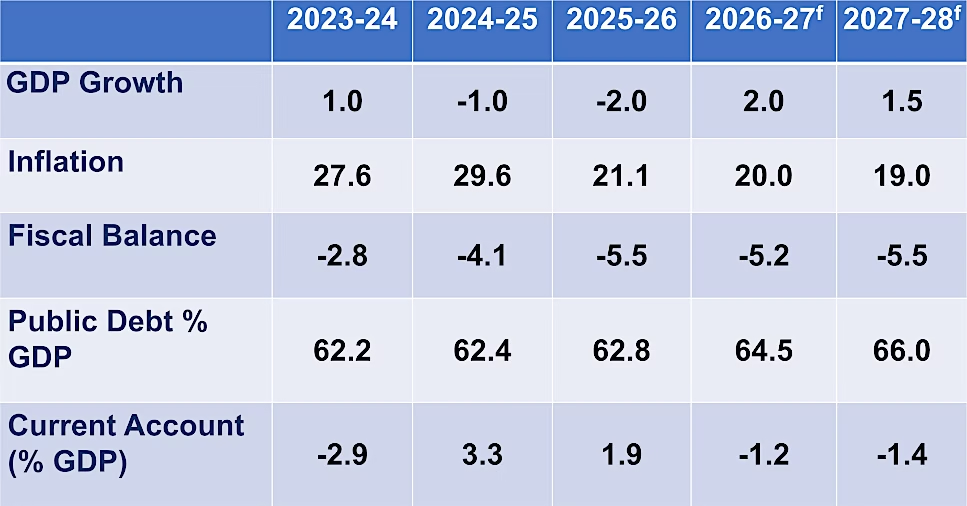
f forecasts
Source: World Bank/Worldbox Business Intelligence
Useful links
https://www.worldbank.org/en/country/myanmar/publication/myanmar-economic-monitor-reports
https://www.transparency.org/en/cpi/2021
https://www.imf.org/en/Countries/MMR
https://www.adb.org/countries/myanmar/main

Source: Worldbox
Global Business Information from Worldbox
Worldbox provides trusted business information on more than 500 million companies across developed and emerging markets.
Access company profiles, credit risk reports, ownership and management details, legal status, financial information and other data to support onboarding, KYB, compliance and risk assessment.
Worldbox data is available through online search, API, Snowflake’s data platform, AWS Marketplace, and AI-ready access through AWS MCP Servers.
Need reliable information on a company or market? Contact Worldbox to discuss your requirements.

 |
 |
 |
 |
Copyright (C) 2026 Worldbox Business Intelligence. All rights reserved.
Our mailing address is:
Worldbox Business Intelligence
Breitackerstrasse 1
Zollikon
Zurich 8702
Switzerland